Draw.Resolve.Make.
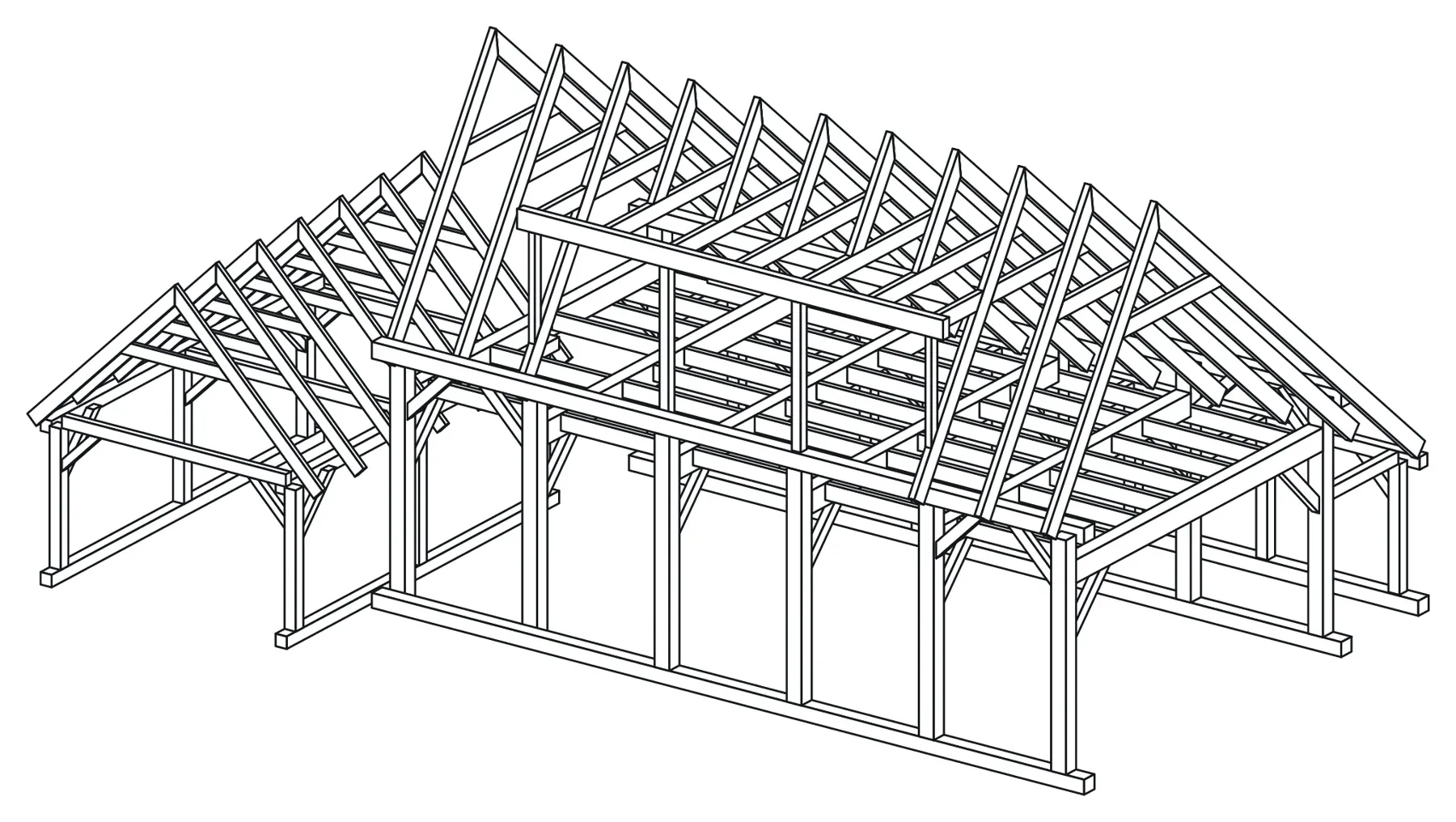 Gebinthuis fisherman's house · 183 parts · drawn by Boomkikker
Boomkikker turns a timber frame into the files a beam saw runs. Draw it in 3D, type it as a cutting list, or describe it to an assistant. Every joint is fitted, every part is checked, and nobody at the machine retypes a measurement.
From a line
to a part.
Points and lines
A frame starts as centrelines in space, in millimetres. Where lines meet, a node forms. Draw them, type the coordinates, or repeat a whole section in a straight line, in a circle or along a helix.
Members
Each line gets a cross-section. The top face carries the height and the front face the width, so a 90 × 90 brace stays 90 × 90 all the way to the saw.
Joints
Every end that lands on another member is cut to the face it meets. Where five or six members crowd one node, overlaps are listed in millimetres, and which member runs through is a choice, not an accident.
Parts
Out comes a numbered cutting list: section, count, length and the cut at each end, with a drawing of all four faces of every part. The brace above is part 02, 1 080 mm on its long edge.
Start from whatever
the job arrives as.
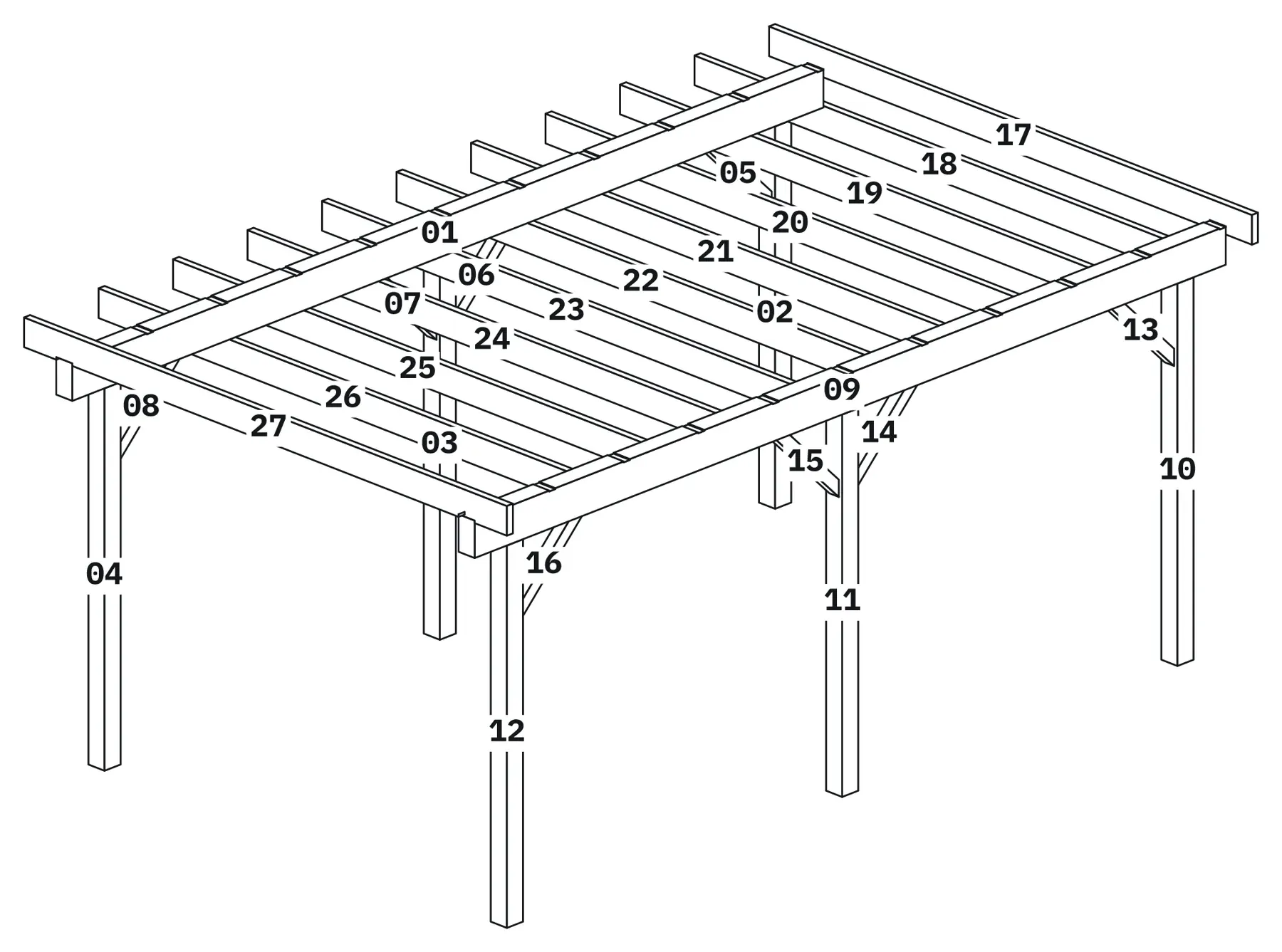 Single carport · 27 parts
Draw it
Build the frame in the 3D fitting workspace: frames, repeats, shapes along sections. With a mouse or a finger.
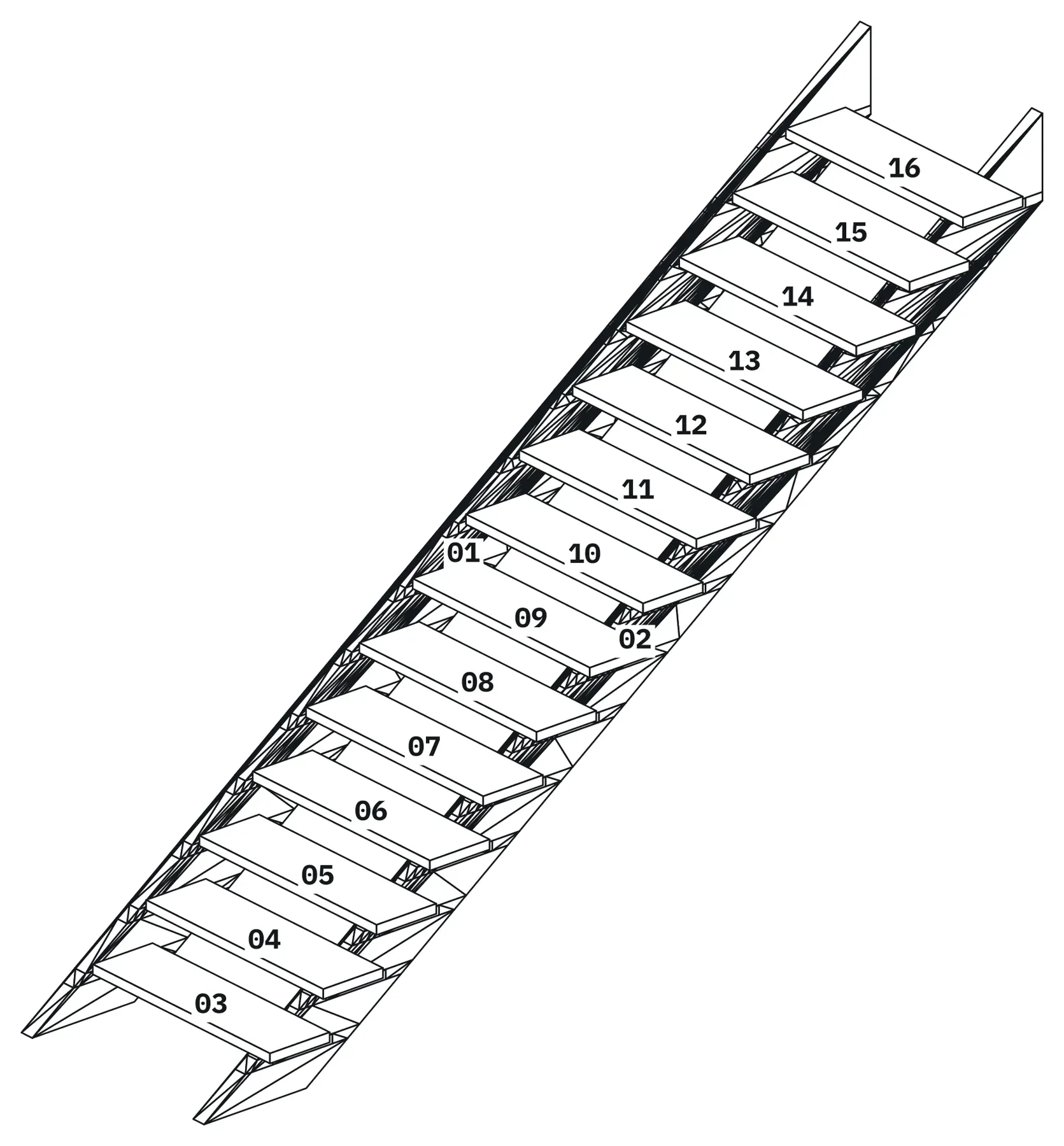 Straight stair, housed stringers · 16 parts
Type it
Write the cutting list in workshop terms: part, section, count, length, and the cut at each end (square, bevel, half bevel or double bevel) picked from a visual chooser. Then drag the control points on a live drawing of all four faces.
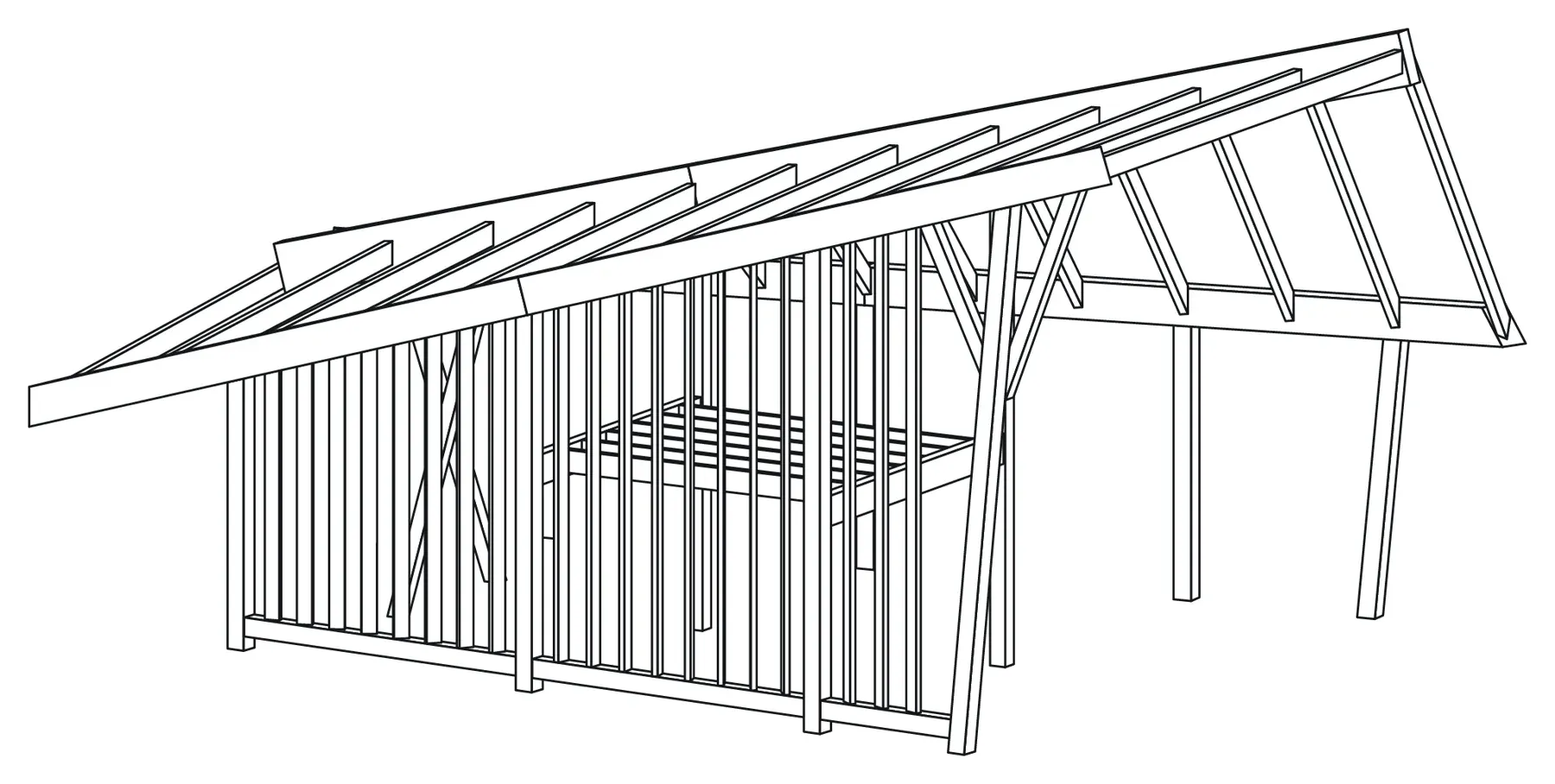 Leaf Fold forest house · 74 parts · designed by an assistant
Ask for it
Connect Claude or ChatGPT once and describe the frame. The answer comes back as a drawing and a link that opens the project in Boomkikker. The assistant goes through the same checks, and never writes the machine file. A person does, after looking.
Files a beam saw runs.
And an export that refuses to fake a cut.
Hundegger BVX has no public specification, so Boomkikker was calibrated against a corpus of real production jobs. Every operation it reads re-encodes to exactly the values it was read from.
Writes 2.0.0 and 2.3.1, the open standard for joinery machines. Reads every version from 1.0, plain or zipped as .btlz.
No public specification exists. Calibrated against real production jobs instead, and checked against them on every release.
The documented fixed-column format that K1, K2 and K3 machines read natively.
A cutting list for the workshop floor and an A4 technical specification with a drawing of every part.
When a format cannot carry an end shape, export stops. The panel names the parts whose ends would come out square and writes no file, unless someone ticks that those ends will be finished by hand. Existing BTLx, BVN and BVX files open, can be corrected and export again; anything Boomkikker cannot model is kept exactly as it arrived.
From the example library. The larger frames were designed by an assistant and fitted by Boomkikker, part by part.
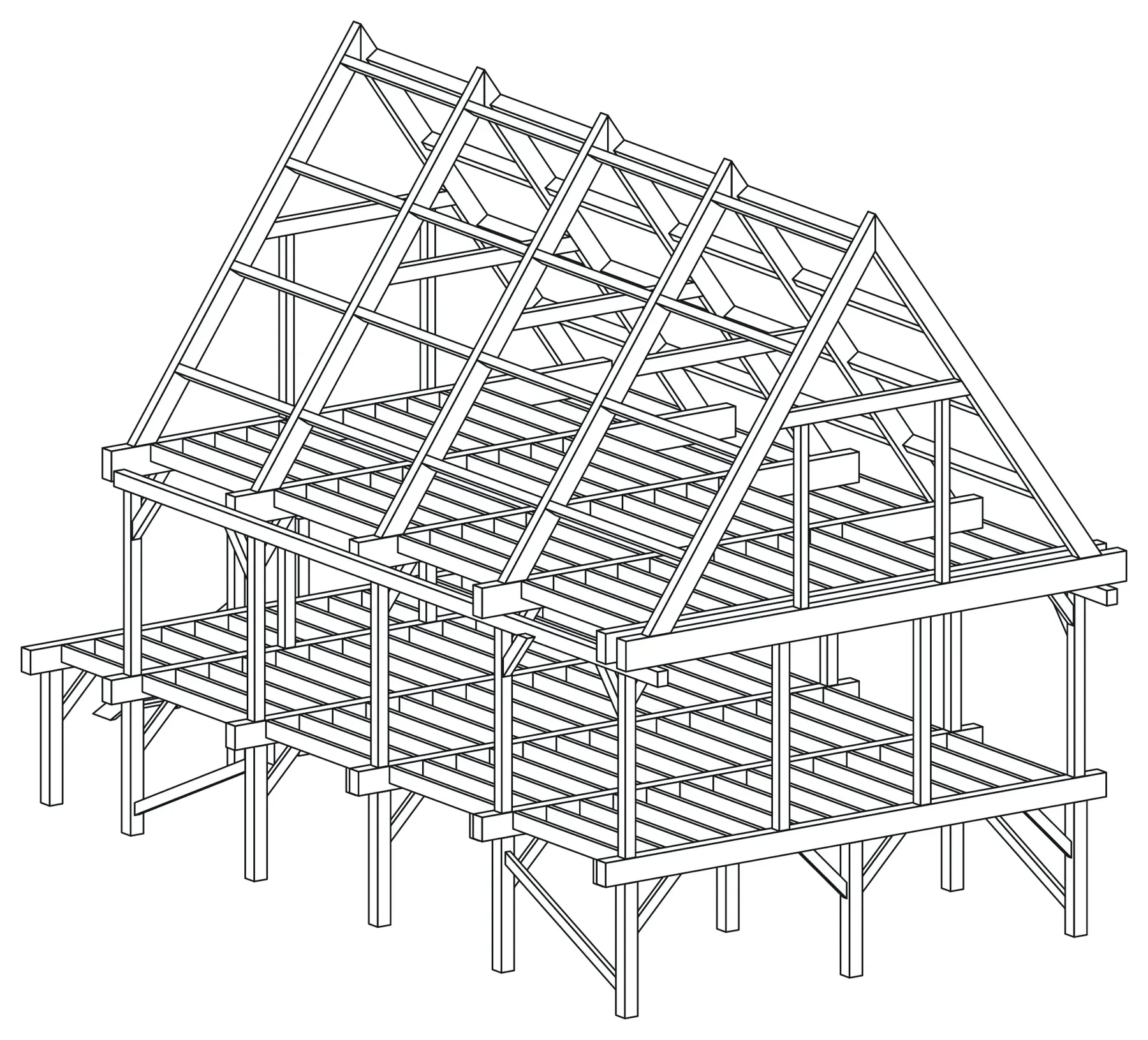 Paalhuis on piles 283 parts
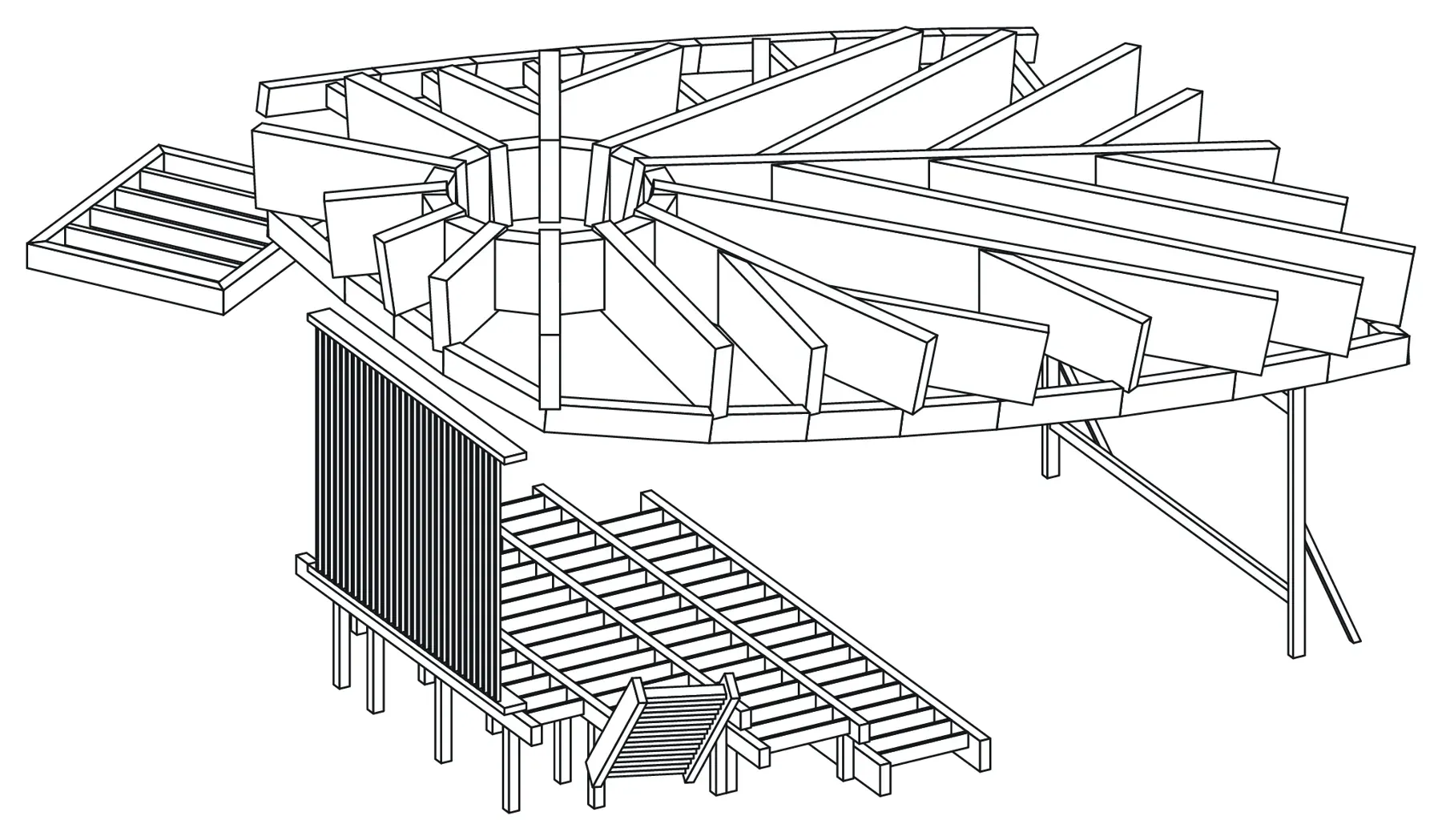 The Hollow forest cinema 243 parts
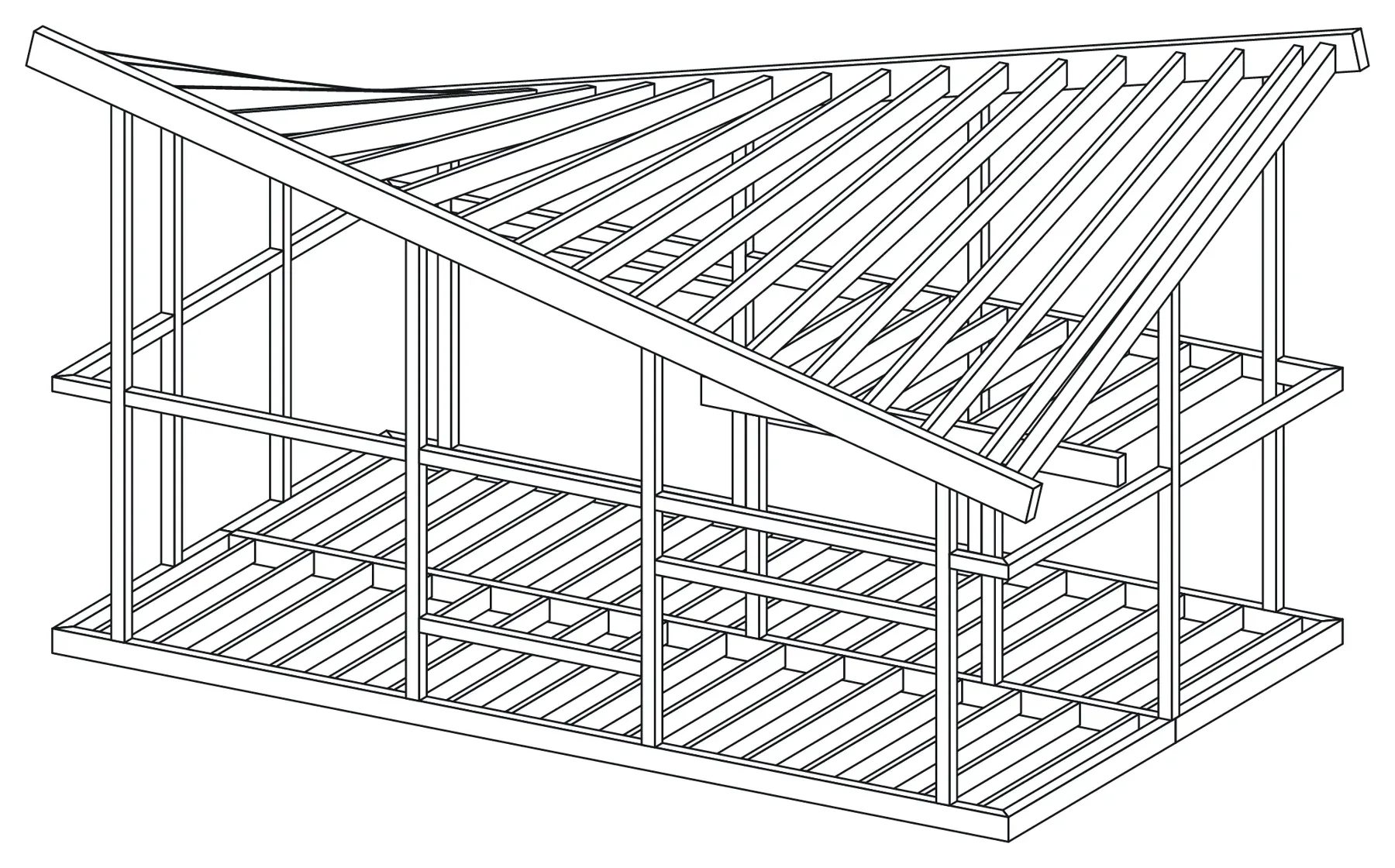 Saddle roof tiny house 99 parts
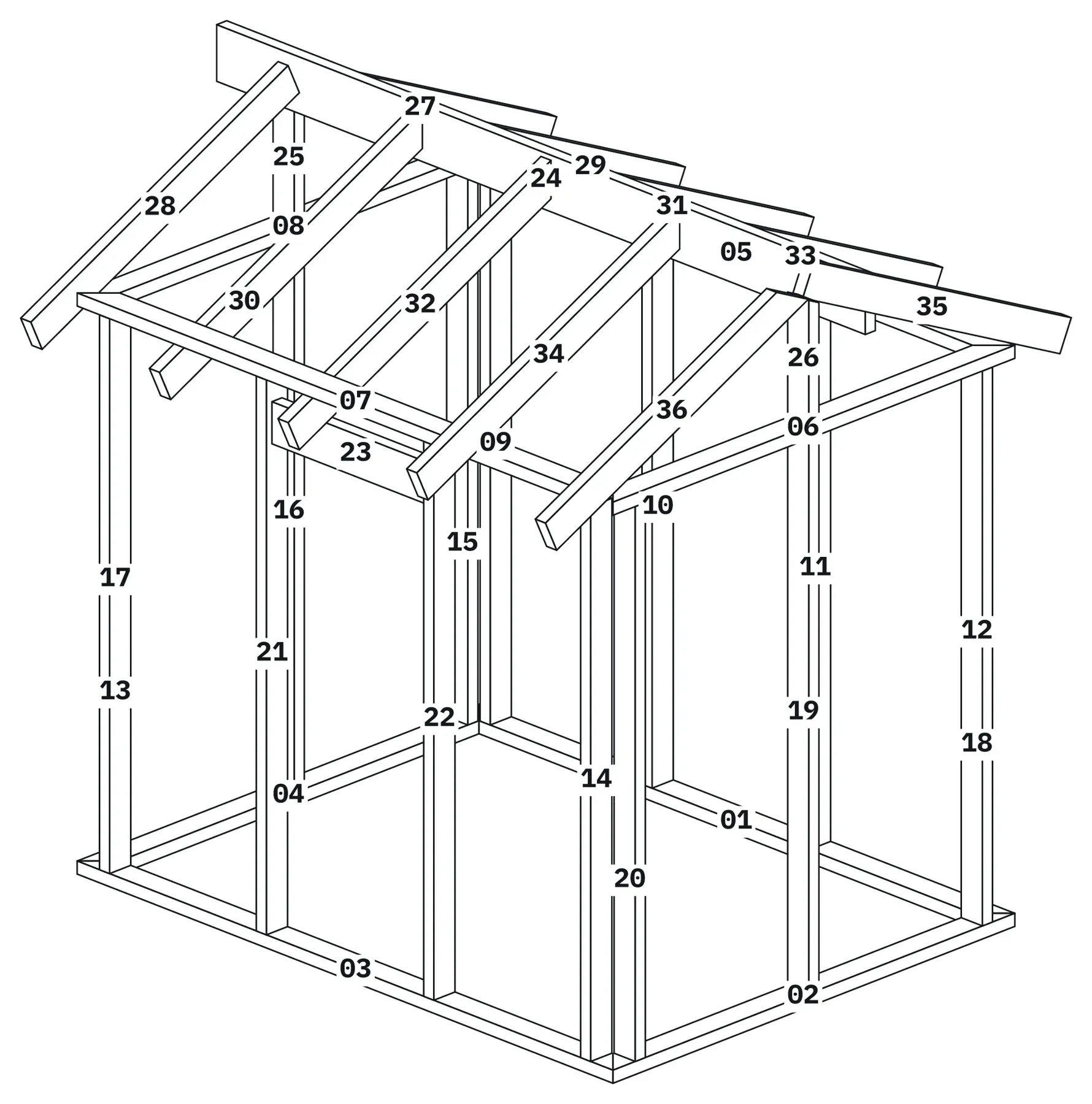 Garden house frame 36 parts
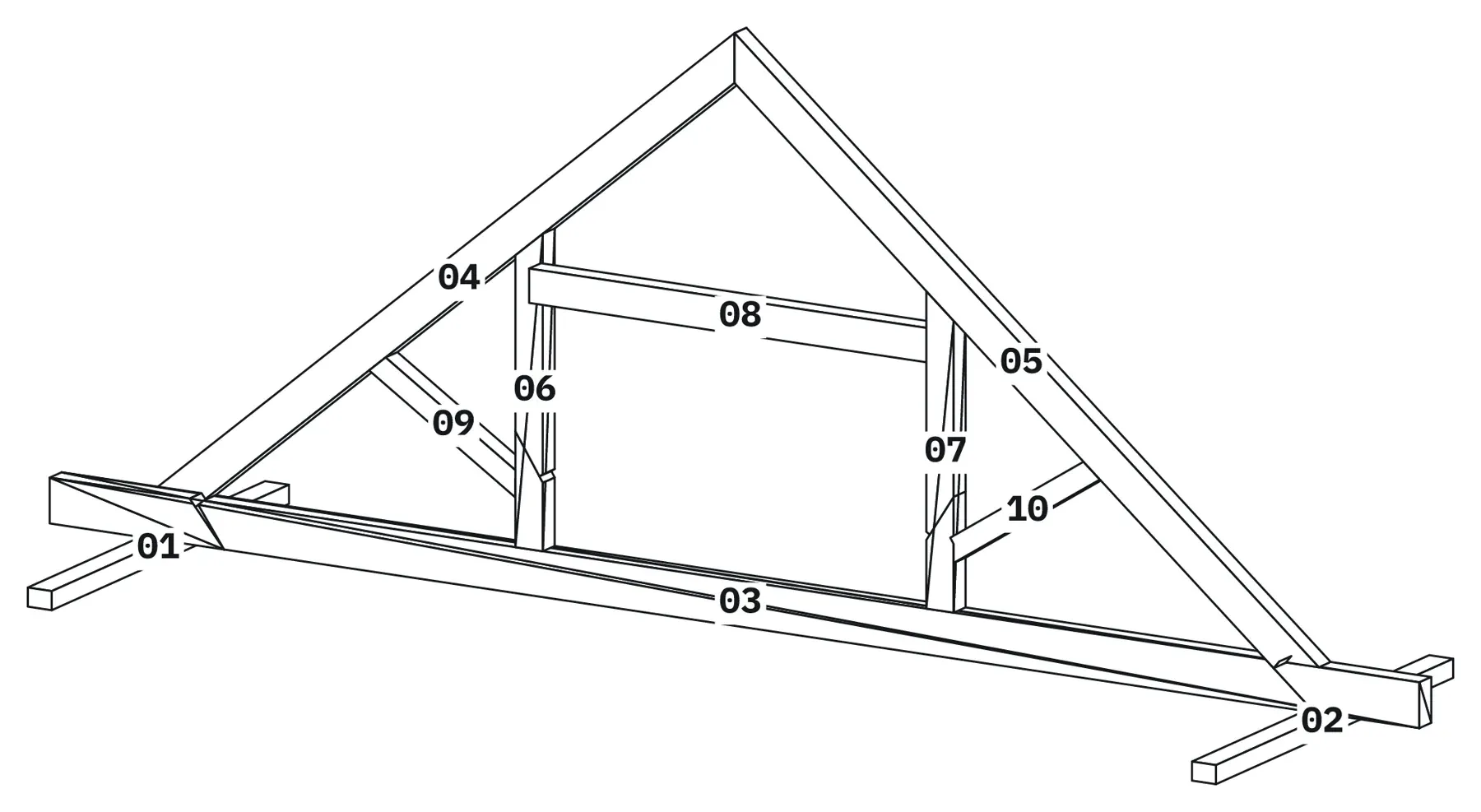 Queen post roof truss 10 parts
Works where
the saw is.
Dutch and English
The screens, the checks and every file it writes follow the language.
Offline
Installs on a phone or a computer and keeps working without a network.
No account needed
Cloud sync and share links are switched on per project, with sign-in by email link.
Plain-language checks
A file does not export while a problem is open, unless someone accepts it knowingly.
Design whatyou canactually build.
Boomkikker is in trials with workshops. Name the machine you run, and the answer will be honest about whether Boomkikker is ready for it.